

As an Amazon affiliate, I earn from qualifying purchases. This means that when you click on a link on this site and make a purchase, I may earn a small commission, which helps support the work of this blog. Rest assured, I only recommend products that I genuinely love and trust.
There is something deeply comforting about a loaf of pull-apart garlic bread fresh from the oven — warm, buttery, and meant to be shared. When that bread is made with ancient grains, it becomes not only nourishing, but incredibly flavorful and surprisingly tender.
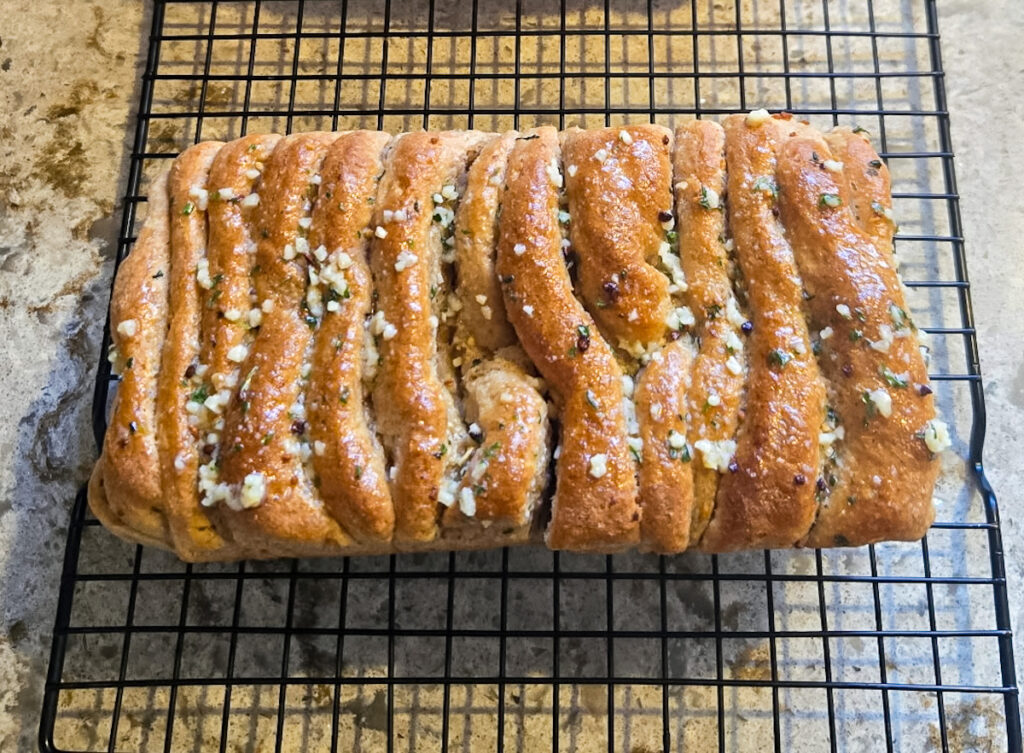
This ancient grain garlic pull-apart bread is made with fresh-milled spelt and kamut, gently mixed and handled to preserve moisture and structure. The result is a soft, golden loaf with distinct layers that pull apart easily — perfect for serving alongside lasagna, pasta, soups, or any cozy from-scratch meal.
If you’ve struggled with dense or dry ancient-grain breads in the past, this recipe will show you how different the process can be when the dough is treated the way ancient grains prefer.
Why Bake Pull-Apart Bread with Ancient Grains?
Ancient grains behave very differently than modern wheat, and when you understand those differences, the results are incredible.
Spelt brings:
- Natural sweetness
- A soft, tender crumb
- Quick hydration
Kamut adds:
- Strength and structure
- A rich, buttery flavor
- Better rise support for shaped loaves
Together, they create a dough that’s flexible enough to layer, yet strong enough to rise beautifully without collapsing.
Unlike modern wheat, ancient grains don’t benefit from aggressive kneading or long proofing times. Instead, they respond best to gentle mixing, short rests, and earlier baking — which makes this pull-apart bread both forgiving and reliable.
What Makes This Garlic Pull-Apart Bread Different?
This recipe is designed specifically for fresh-milled flour and ancient grains, not adapted from a modern wheat recipe.
Here’s what sets it apart:
- No long autolyse or complicated steps
- Short kneading to protect delicate gluten
- Higher hydration for softness
- Butter used strategically to separate layers, not weigh them down
- Baked before the dough fully doubles to prevent dryness
The garlic butter melts into the folds as the bread bakes, creating steam between the layers and giving the loaf its signature pull-apart texture.
Ingredients You’ll Need
Dough
- Fresh-milled spelt flour
- Fresh-milled kamut flour
- Warm water
- Active dry yeast
- Honey or sugar
- Olive oil or butter
- Fine sea salt
- Apple cider vinegar (optional, but helpful for spelt)
Garlic Butter Filling
- Softened butter
- Fresh garlic, finely minced
- Olive oil
- Sea salt
- Optional herbs (parsley, oregano, or basil)
Exact measurements are listed in the recipe card below.
Step-by-Step: How to Make Ancient Grain Garlic Pull-Apart Bread
1. Mix the Dough Gently
All ingredients are mixed together until no dry flour remains. The dough should feel soft and slightly sticky, not firm.
Ancient grains hydrate quickly, so resist the urge to add extra flour early on.
2. Short Knead + Rest
Knead for just a few minutes — only until smooth — then allow the dough to rest briefly. This rest replaces aggressive kneading and allows the flour to fully absorb moisture.
This is a key step for preventing dryness in ancient-grain bread.
3. First Rise (Shorter Than You Think)
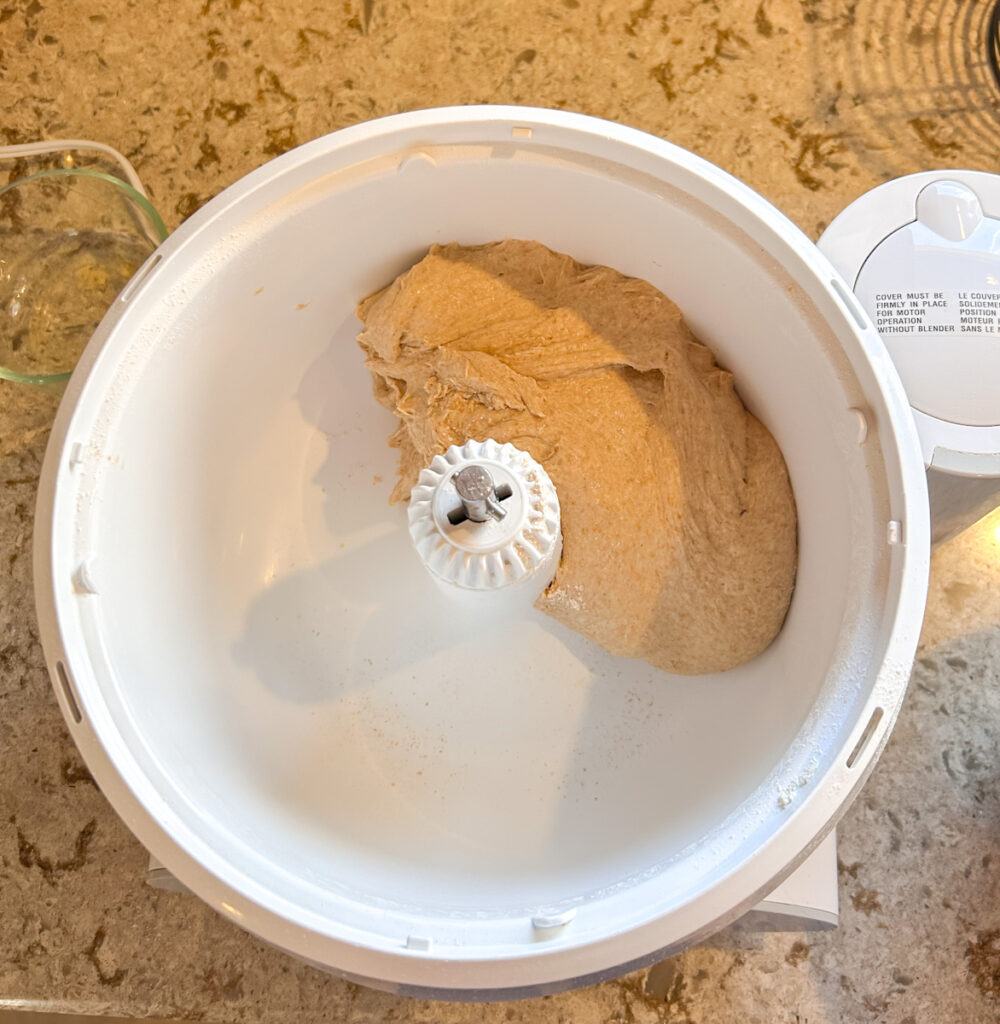
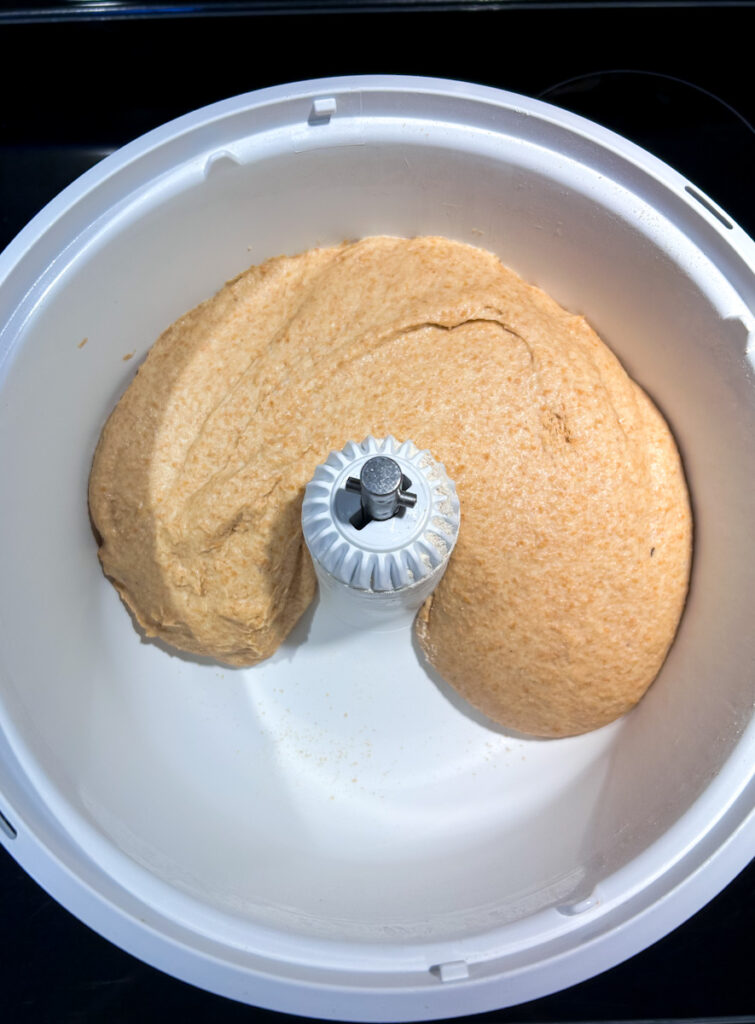
Let the dough rise just until puffy and relaxed, not doubled. Depending on your kitchen, this can take as little as 20–30 minutes.
Ancient grains over-ferment easily, so it’s better to shape early than wait too long.
4. Shape the Pull-Apart Layers
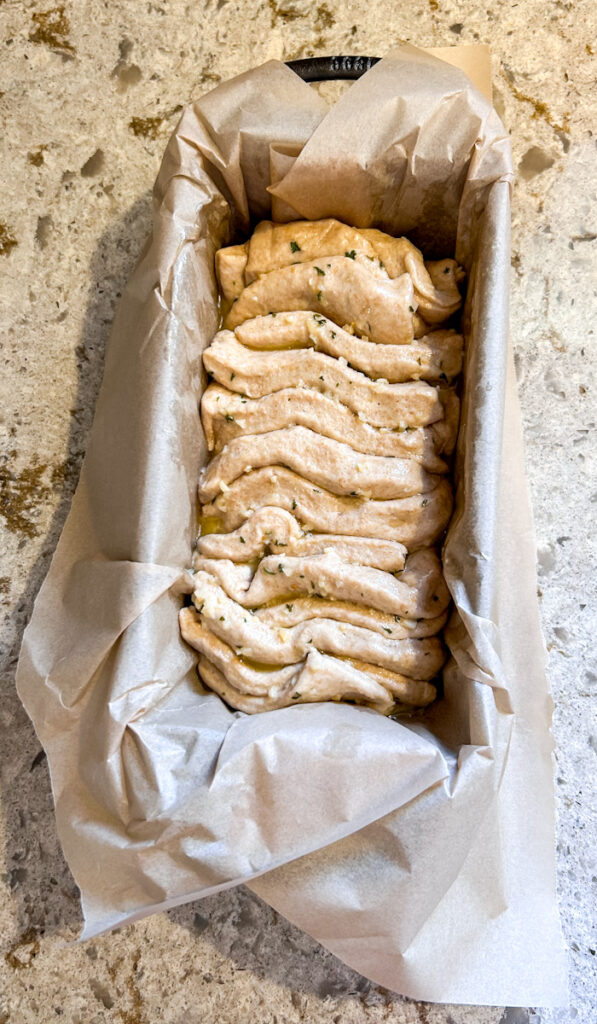
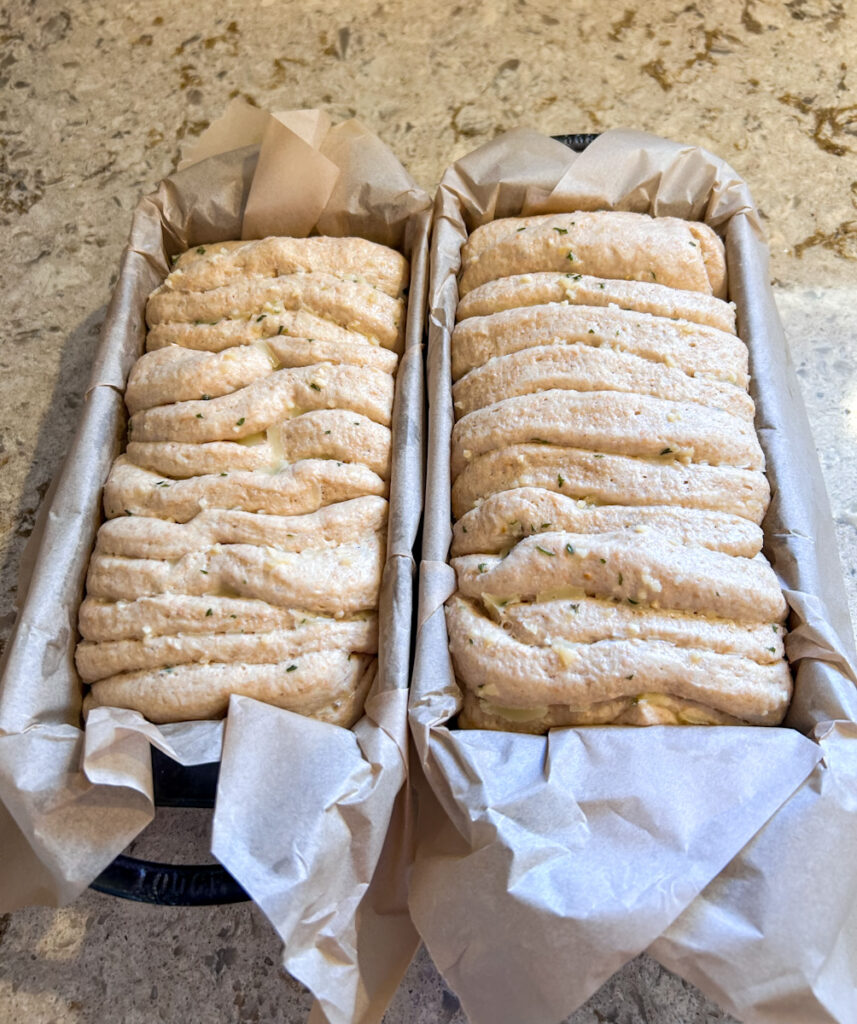
Roll the dough into a rectangle, spread generously with garlic butter, then cut into strips. Stack the strips and slice into sections, placing them upright in a parchment-lined loaf pan.
The dough may look messy — that’s exactly what you want.
5. Second Rise
Allow the shaped loaf to rise just until the layers soften and reach the top of the pan. This is usually a short rise.
6. Bake Until Golden
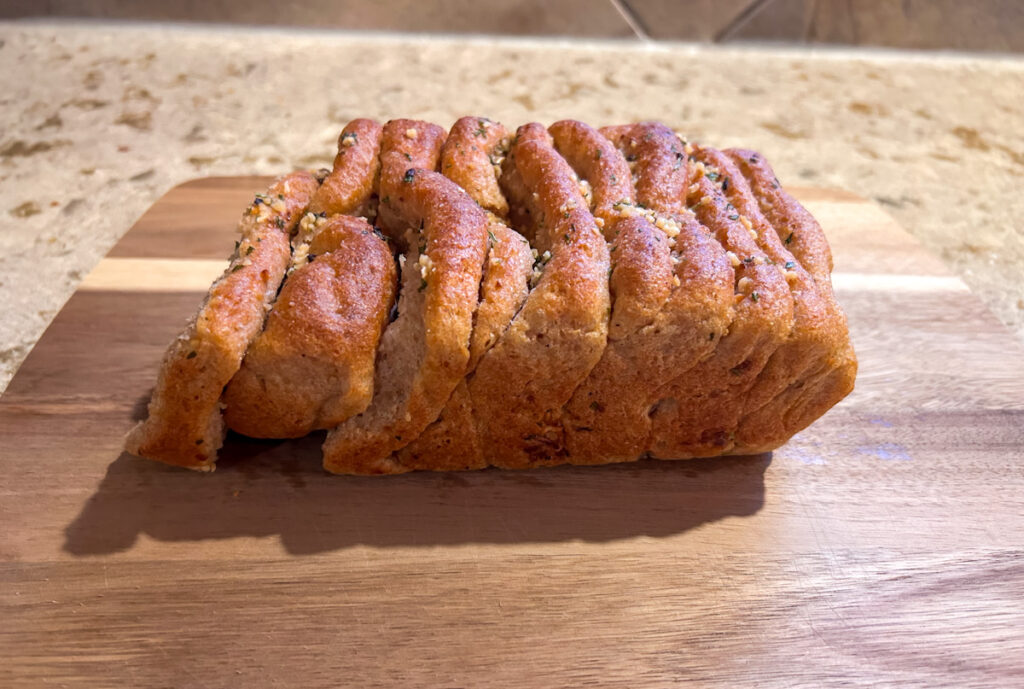
Bake until deeply golden and fragrant. If the top browns too quickly, tent loosely with foil for the final minutes.
The internal temperature should reach about 195–200°F.
Tips for Success with Ancient Grains
- Do not wait for the dough to double — ancient grains are ready sooner
- Avoid over-kneading, which weakens spelt gluten
- Butter is your friend — it protects moisture and improves texture
- Bake earlier rather than later for better oven spring
If your loaf feels soft, relaxed, and slightly under-proofed before baking, you’re doing it right.
Serving Suggestions
This garlic pull-apart bread pairs beautifully with:
- Lasagna or baked pasta
- Tomato soup or creamy soups
- Roasted vegetables
- Holiday meals or family gatherings
Serve warm and let everyone pull off their own pieces — it’s meant to be shared.
Storage & Reheating
- Store covered at room temperature for up to 2 days
- Reheat gently in the oven at 300°F
- Avoid microwaving, which can toughen ancient-grain bread
Ancient Grain Garlic Pull-Apart Bread (Spelt + Kamut)

Equipment
- 1 bread loaf pan
Ingredients
Dough
- 240 grams fresh-milled spelt flour
- 60 grams fresh-milled kamut flour
- 210 grams warm water (105–110°F)
- 7 grams active dry yeast
- 10 grams honey or sugar
- 30 grams olive oil or melted butter
- 6 grams fine sea salt
- 5 grams apple cider vinegar (optional, recommended for spelt)
Garlic Butter Filling
- 56 grams softened butter (4 Tbsp)
- 3 cloves garlic finely minced
- 1 Tbsp olive oil
- ½ tsp fine sea salt
- 1 Tbsp chopped parsley (optional)
Instructions
Mix the dough
- Combine all dough ingredients until no dry flour remains. Dough should be soft and slightly sticky.
Short knead + rest
- Knead gently for 3–4 minutes until smooth. Cover and rest for 10 minutes.
First rise
- Let dough rise until puffy and relaxed, about 20–45 minutes. Do not wait for it to double.
Shape the loaf
- Roll dough into a rectangle. Spread garlic butter evenly. Cut into strips, stack, slice, and place upright in a parchment-lined loaf pan.
Second rise
- Rest until layers soften and reach the top of the pan, about 20–30 minutes.
Bake
- Bake at 375°F for 30–35 minutes. Tent loosely if browning too quickly. Internal temperature should reach 195–200°F.
Cool slightly and serve
- Cool 10 minutes before pulling apart and serving warm.
Notes
- Ancient grains bake best before fully doubled
- Avoid over-kneading spelt dough
- Butter protects moisture and improves pull-apart texture
- Recipe doubles easily for two loaves
Shop this Post:
As an Amazon affiliate, I earn from qualifying purchases. This means that when you click on a link on this site and make a purchase, I may earn a small commission, which helps support the work of this blog. Rest assured, I only recommend products that I genuinely love and trust.
Final Thoughts
Ancient grains don’t need to be complicated or intimidating. When you work with their natural rhythms, they produce bread that’s soft, flavorful, and deeply satisfying.
This ancient grain garlic pull-apart bread is a perfect example — simple ingredients, gentle handling, and a result that feels both rustic and special.
If you try this recipe, I’d love to hear how it turns out for you.
Frequently Asked Questions
Related Posts:
This looks delicious! I love trying new bread recipes. Especially excited to try ancient grains.
Oh wow..this looks amazing! Saving this for later. I need to buy some more grains so I can try it!
This looks so good, and I’m excited to try it!
OMG, you sure got my juices flowing. This looks amazing! I’m so going to have to try it! What a great recipe!
This looks and sounds delicious! I just recently started my freshly milled journey and don’t yet have spelt or kamut. But, I definitely hope to get them! So, pinning this for later!
You definitely should add them to your grains collection. They have the BEST flavor!