


As an Amazon affiliate, I earn from qualifying purchases. This means that when you click on a link on this site and make a purchase, I may earn a small commission, which helps support the work of this blog. Rest assured, I only recommend products that I genuinely love and trust.
If you’ve tried making ancient grain tortillas and ended up with dough that was sticky, fragile, or impossible to roll, you’re not alone.
Ancient grains like spelt and kamut behave very differently from modern wheat. They absorb water more slowly, form gentler gluten, and require more rest — but when handled correctly, they make some of the most flavorful, flexible tortillas you can bake at home.
This recipe is designed with ancient grains in mind and developed specifically for fresh-milled flour. The result is soft, sturdy tortillas that hold up beautifully for everyday meals — from tacos and quesadillas to wraps and burritos — without cracking or tearing.
Why This Recipe Works for Ancient Grains
Ancient grains behave very differently than modern wheat, especially when used in fresh-milled form. Their gluten structure is naturally weaker and more delicate, which means the dough spreads more easily and does not respond well to heavy kneading. Rather than forcing strength into the dough, ancient grains benefit from slightly lower hydration and longer rest times that allow the flour to fully absorb water and relax on its own.
This recipe is intentionally designed to work with those characteristics instead of against them. A balanced blend of spelt and kamut provides just enough structure without sacrificing tenderness, while carefully controlled hydration keeps the dough soft but manageable. Using slightly larger dough portions helps create tortillas with more body, and proper rest timing ensures the dough rolls easily without shrinking or tearing. Gentle handling throughout the process protects the fragile gluten, resulting in soft, sturdy tortillas that are reliable for everyday meals.
Why this method is reliable:
- Balanced spelt + kamut blend for structure and flexibility
- Controlled hydration to prevent spreading
- Larger dough portions for thicker tortillas
- Proper rest timing instead of extra kneading
- Gentle handling to protect delicate gluten

Troubleshooting Guide for Ancient Grain Tortillas
This section addresses the most common issues people run into when making ancient grain tortillas with fresh-milled ancient grains, with an emphasis on why they happen and how to fix them without starting over.
Dough Is Sticky or Hard to Handle
Why does it happen:
Ancient grains absorb water slowly because the bran is intact.
Fixes:
- Rest the dough longer (30–45 minutes)
- Lightly oil hands instead of adding flour
- Avoid over-kneading
Tortillas Turn Out Too Thin
Why does it happen:
Soft ancient grains (like spelt and einkorn) spread more easily than hard varieties of wheat.
Fixes:
- Make fewer tortillas from the same dough
- Reduce water slightly
- Roll to a smaller diameter
- Blend grains (soft grain + hard grain, such as kamut, for structure)
Tortillas Crack or Tear When Rolling
Why does it happen:
The dough is too dry or hasn’t rested long enough.
Fixes:
- Add 1–2 teaspoons of water
- Increase rest time
- Handle gently — don’t force thinness
Tortillas Don’t Bubble When Cooking
Why does it happen:
Ancient grains don’t trap steam the same way modern flour does.
Fixes:
- Preheat pan fully (3–5 minutes)
- Cook on medium-high heat
- Don’t flip too early
- Gently press after flipping
Note: Bubbling is optional — softness is more important.
Tortillas Are Stiff After Cooling
Why does it happen:
Over-cooking or skipping the steaming step.
Fixes:
- Cook just until light golden spots appear
- Stack tortillas in a towel immediately
- Reheat briefly in a dry skillet
Dough Shrinks Back When Rolling
Why does it happen:
Ancient grain gluten needs relaxation, not strength.
Fixes:
- Extend rest time
- Roll gently from the center
- Let the partially rolled dough rest, then finish rolling
Recipe Tips
- Ancient grain dough should feel soft and relaxed, not firm.
- Resting the dough fully helps prevent shrinking and cracking.
- Roll tortillas slightly thicker for better structure.
- Don’t overcook — light golden spots are enough.
- Stack cooked tortillas in a towel to trap steam and keep them flexible.
Ingredients for Ancient Grain Tortillas
Flour
- 150 g cups fresh-milled spelt
- 30 g cup fresh-milled kamut (Khorasan wheat)
Remaining ingredients
- ½ teaspoon fine sea salt
- ½ teaspoon baking powder (optional — for tenderness only)
- 3 tablespoons lard (or tallow)
- ⅓ cup hot water, plus 1–2 teaspoons only if needed
Step-by-Step Instructions for Ancient Grain Tortillas
1. Mix dry ingredients
In a medium bowl, whisk together the spelt, kamut, salt, and baking powder (if using).
2. Rub in the fat
Add the lard and work it into the flour with your fingers until the mixture looks like damp sand.
There should be no visible chunks of fat.
3. Add water gradually
Start with ⅓ cup hot water and mix until a dough forms.
Add water by the teaspoon only if the dough feels dry.
Goal: soft and pliable, not sticky.

4. Knead briefly
Knead gently for 30–60 seconds, just until smooth.
Do not over-knead — ancient grains form gluten quickly and break down just as fast.
5. Rest the dough (critical)
Cover and rest for 40–50 minutes.
This step allows:
- Spelt to fully hydrate
- Kamut gluten to relax
- Easier rolling
- Less shrinkage
Do not skip or shorten this rest.
6. Divide
Divide the dough into 8-10 equal balls.
Larger portions help create thicker, sturdier tortillas.

7. Roll

Roll each ball into a 7–8 inch circle. Here, I always use my tortilla press.
They should be thin, but not paper-thin.
If the dough resists, pause for 1–2 minutes, then continue rolling.

8. Cook
Preheat a dry cast-iron skillet over medium-high heat for 3–5 minutes.
Cook each tortilla:
- 45–60 seconds on the first side (until matte with light spots or bubbles form)
- Flip and cook 20–30 seconds on the second side
Optional: gently press with a spatula after flipping to encourage bubbling.

9. Steam
Stack cooked tortillas immediately wrapped in a towel or placed in a tortilla warmer to trap steam and keep them soft.

What to Expect from Ancient Grain Tortillas
- Slightly thicker than wrap-style tortillas
- Soft and flexible
- Mild nutty flavor
- May bubble lightly — or not at all (both are normal)
- Fold without cracking
Bubbling is not a requirement for good ancient-grain tortillas.
Modern Wheat Variation
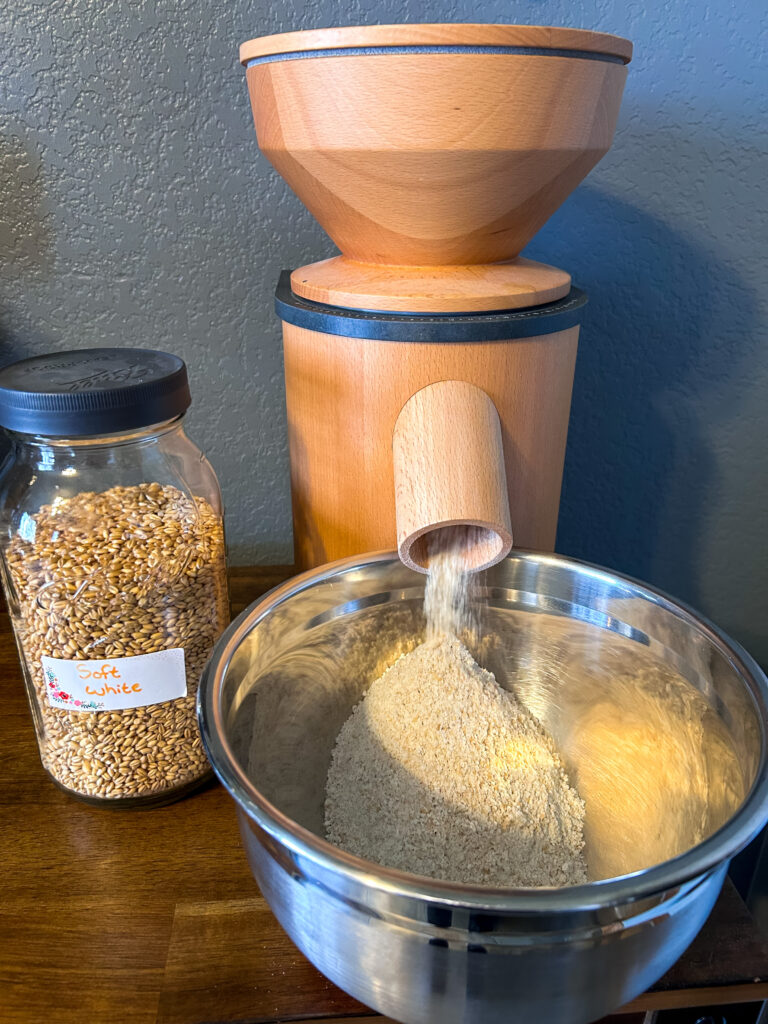
If you’re using modern wheat instead of ancient grains, this same method works with:
Flour
- 140g cups fresh-milled soft white wheat
- 50g cup fresh-milled hard white wheat
Adjustments
- Water: ⅓ cup + 1 tablespoon
- Rest time: 30–40 minutes
- Dough will feel slightly more elastic and predictable
Everything else remains the same.
Storage & Reheating
- Store cooled tortillas in an airtight container
- Refrigerate up to 5 days
- Freeze with parchment between layers
- Reheat briefly in a dry skillet for the best texture
Ancient Grain Tortillas

Equipment
- Grain mill
- Kitchen scale
Ingredients
- 150 grams fresh-milled spelt
- 30 grams fresh-milled kamut (Khorasan wheat)
- ½ tsp fine sea salt
- ½ tsp baking powder optional — for tenderness only
- 3 Tbsp lard or tallow
- ⅓ cup hot water add 1–2 teaspoons only if needed
Instructions
- In a medium bowl, whisk together the spelt, kamut, salt, and baking powder (if using).
- Add the lard and work it into the flour with your fingers until the mixture looks like damp sand. There should be no visible chunks of fat.
- Start with ⅓ cup hot water and mix until a dough forms. Only add additional water by the teaspoon if the dough feels dry.Goal: soft and pliable, not sticky.
- Knead gently for 30-60 seconds, just until smooth.Do not over-knead — ancient grains form gluten quickly and break down just as fast.
- Cover and rest for 40-50 minutes.
- Divide the dough into 8-10 equal balls.
- Roll each ball into a 7-8 inch circle. They should be thin, but not paper-thin.
- Preheat a dry cast-iron skillet over medium-high heat for 3–5 minutes.Cook each tortilla 45–60 seconds on the first side.Flip and cook 20–30 seconds on the second side.
- Stack cooked tortillas immediately in a towel to trap steam and keep them soft.
Notes
Storage & Reheating
- Store cooled tortillas in an airtight container
- Refrigerate up to 5 days
- Freeze with parchment between layers
- Reheat briefly in a dry skillet for best texture
Shop this Post:
As an Amazon affiliate, I earn from qualifying purchases. This means that when you click on a link on this site and make a purchase, I may earn a small commission, which helps support the work of this blog. Rest assured, I only recommend products that I genuinely love and trust.

Related Posts:
Final Thoughts
Ancient grain tortillas don’t need to be perfect to be good. They only need to be understood. When you learn how spelt and kamut behave, making tortillas becomes simple and intuitive — and the same method easily carries over to other ancient grains and flatbreads, too.
These tortillas were surprisingly very good. I was hesitant because I loved the old fashioned white all purpose flour tortillas. Honestly, I will not miss the old. This is one healthy exchange I’ll gladly make. 😊
Thank you! I’m so glad you enjoyed them!